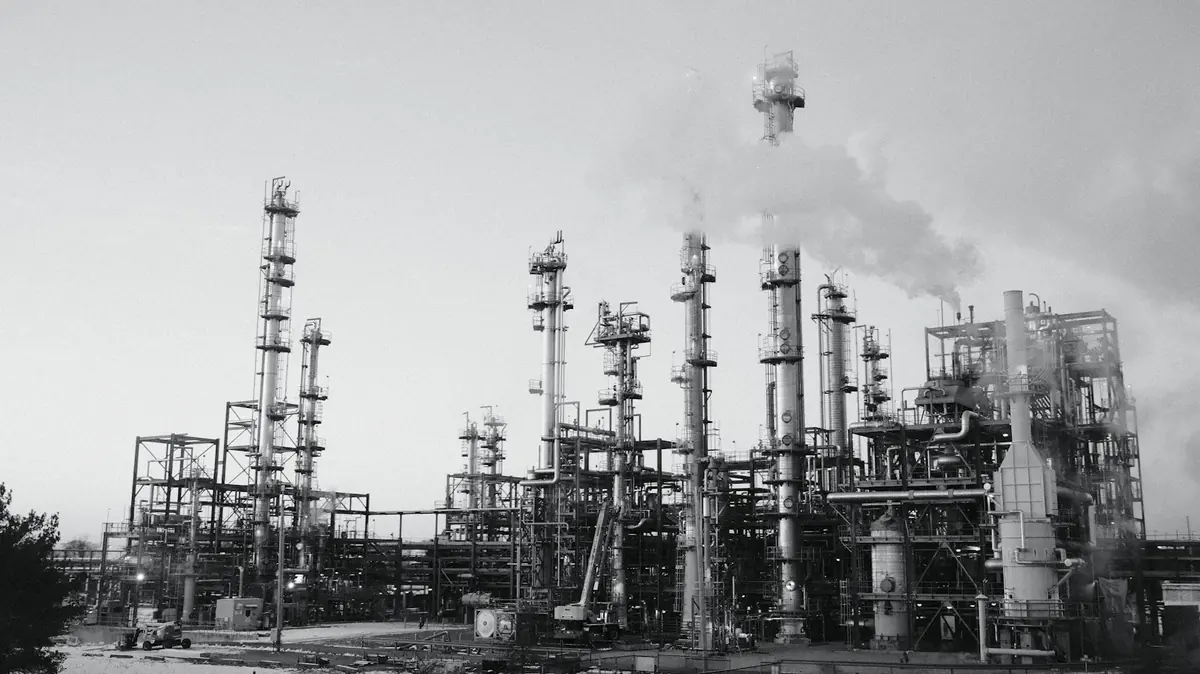
Cutback bitumens are made by dissolving pure bitumen in solvents or petroleum oils.
The type and quality of a cutback depend on the quality of the base bitumen and on the type and amount of solvent: the more solvent the cutback contains, the more fluid it is.
Cutbacks are used where hot bitumen causes problems: no access to heating equipment, breakdown of the bitumen at high temperatures, the bitumen cooling during the work, poor penetration into fine mineral material, worker safety, fire risk and lost time. They are used in road building for surface coats (prime and tack), cold mixes and surface treatments, and in some cases are blended at the plant or mixed in place.
Cutbacks are classified by viscosity grade and divided into three groups by curing speed and solvent type.
Cutback bitumens
Rapid curing cutback (RC)
When gasoline is used to dissolve the pure bitumen, the cutback is called rapid curing, because shortly after application the solvent evaporates and the base bitumen remains in place.
Medium curing cutback (MC)
Medium curing cutbacks are made by dissolving pure bitumen in kerosene, which evaporates more slowly and over a longer time than gasoline. The number in the MC designation is the minimum kinematic viscosity in centistokes.
Slow curing cutback (SC)
Slow curing cutbacks are made by dissolving pure bitumen in oils and low volatility petroleum solvents such as gas oil or fuel oil, or can be obtained directly from crude oil distillation like pure bitumens, in which case the solvent oils have not yet separated from them. Full curing of these bitumens takes a long time after application.
Packing data
Steel drum (barrel) specification
Steel drums are widely used for packing bitumen; their size, thickness and capacity must suit the filling equipment. Standard drums have a body plate thickness of 0.6 mm and come in two heights, tall and short, of 89 ± 3 cm and 68 ± 3 cm.
Property
Quantity
Unit
Body Plate Thickness
0.6
mm
Top & Bottom Plate
0.6
mm
Thickness Height
100
cm
Diameter
50±2
cm
Lid Hole Position
Center
Lid Hole Diameter
20
cm
Net Filling Capacity
182.5±2.5
Kg
Empty Drum Weight
9.5±0.2
Kg
Color
Furnace Black
Short drums hold about 150 kg and cost more per tonne than tall drums; in many markets tall drums of 180 kg filling are the most used.
A 20 ft container carries 110 drums without pallets or 80 drums palletised; a 40 ft container carries 137 drums without pallets or 150 drums palletised.
A flatbed truck carries about 115 drums without pallets or 90 drums palletised.
Used drums are not recommended: they do not meet international quality standards, and new drums reduce transport risk.
Overview
Medium curing cutback is bitumen blended with kerosene. It cures more slowly than RC, giving a longer working time for prime coats over granular bases, cold mixes and patching. Grades MC-30 to MC-3000 are specified under ASTM D2027/D2027M by kinematic viscosity at 60°C.
The numeric grade is a standard classification, not a general use recommendation. Confirm full specification limits and local permitted applications.
GradesMC-30 · MC-70 · MC-250 · MC-800 · MC-3000
StandardsASTM D2027/D2027M, edition specified by purchaser
The table is a selection guide. The agreed specification, edition and certificate of analysis for your lot determine acceptance.
Grade
Curing type
Acceptance values
MC-30
Medium curing
ASTM D2027 limits by edition
MC-70
Medium curing
ASTM D2027 limits by edition
MC-250
Medium curing
ASTM D2027 limits by edition
MC-800
Medium curing
ASTM D2027 limits by edition
MC-3000
Medium curing
ASTM D2027 limits by edition
Specifications
Technical specifications.
Typical limits with the test method for each property. A certificate of analysis is issued for each lot; it and the agreed specification govern acceptance.
MC cutback: specification
Limits of ASTM D2027/D2027M. Distillation fractions are percentages of the total distillate to 360°C.
Flash point using the method specified for the grade
Distillation fractions, residue and water content
Residue viscosity or penetration, ductility and solubility as specified
Request the grade specific analysis with your quotation. Results, test methods and the applicable specification are confirmed for the supplied lot.
Packing
Packing and shipment formats.
The packing system is confirmed against the grade, handling equipment and transport requirements.
Representative packaging imageDrums
New steel drums
Sealed new steel drums, the most flexible way to ship: any quantity, any container, unloaded by forklift at site. Drums come tall or short; tall drums are the more widely used, and short drums cost more per tonne. We do not recommend used drums, which do not meet international quality standards; new drums reduce transport risk.
180 ± 3 kg net / 190 ± 3 kg gross per drum
150 ± 3 kg net / 159 ± 3 kg gross per drum
Stuffed in 20 ft containers
Marked and labelled to your instructions
Specification
Body plate thickness
0.6 mm
Top and bottom plate thickness
0.6 mm
Height
89 ± 3 cm tall drum, 68 ± 3 cm short drum
Diameter
50 ± 2 cm
Lid hole position
Centre
Lid hole diameter
20 cm
Net filling capacity
180 ± 3 kg tall drum, 150 ± 3 kg short drum
Empty drum weight
9.5 ± 0.2 kg
Colour
Furnace black
Loads per unit
Transport
Without pallets
Palletised
20 ft container
110 drums
80 drums
40 ft container
137 drums
150 drums
Flatbed truck
About 115 drums
About 90 drums
Representative packaging imageLiquid
ISO tanks
Insulated ISO tank containers for compatible liquid products, sealed and reusable.
Product and temperature compatibility confirmed
Discharge requirements agreed before loading
Reusable tank
Delivery terms
Export delivery terms.
FOB, CFR and CIF quotations under Incoterms 2020, from UAE ports.
Term
Name
What it covers
Details
FOB
Free on board
We deliver the cargo on board at the UAE port of loading.
Risk passes to you once the cargo is on board the vessel at the UAE port. You book and pay the sea freight and insurance. Best when you already have a freight forwarder or a shipping line contract.
CFR
Cost and freight
We pay the sea freight to your named port.
We book and pay the freight to your destination port. Risk still passes on board at loading, so you arrange cargo insurance. A simple choice when you want one landed freight price without buying our insurance.
CIF
Cost, insurance and freight
Freight and cargo insurance to your named port, both on us.
As CFR, plus we take out cargo insurance for your benefit until the destination port. Often requested by banks under a letter of credit.